1.introduce
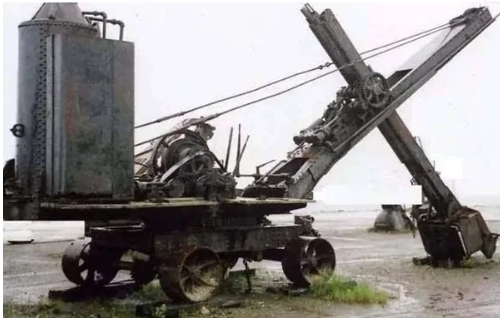
Backhoe loader, sometimes referred to as loader backhoe, loader excavator, loose excavator, or commonly referred to as backhoe in the industry, is a heavy-duty equipment vehicle composed of a tractor like device and a loader type shovel/bucket mounted device with a backhoe installed at the front and a backhoe installed at the rear. Due to its relatively small size and high versatility, backhoe loaders are not only very common in developing countries, but also in urban engineering and small construction projects such as building small houses and repairing urban roads. This type of machine is similar to and originated from what is now known as TLB (Tractor Loader Backhoe), an agricultural tractor with front loader and rear backhoe attachments. The true development of backhoes actually began in 1947, when inventors founded the Wain Roy Corporation located in Haberston, Massachusetts. In 1947, Wain Roy Company developed and tested the first true backhoe excavator. In April 1948, Wayne Roy sold the first fully hydraulic backhoe excavator installed on a Ford 8N tractor to Connecticut Lighting Power Company for a total price of $705.
2.history
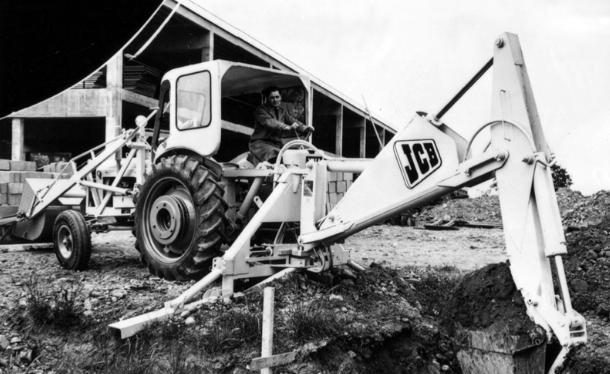
Backhoe excavators developed synchronously with the United States and were first produced by JCB in the UK in 1953, but it was only a prototype. The world's first excavator loader with factory warranty was launched by J.I. in the United States. Taking 1957 as an example. The company's 320 model is the world's first continuous backhoe loader. Backhoe loaders are based on tractors, but if the loader and backhoe are permanently/permanently connected, backhoe loaders were and are almost never referred to as tractors. Backhoe loaders are usually not used for towing and typically do not have a power take-off (PTO) as they are typically used to drive hydraulic pumps for operating attachments. If the backhoe is permanently installed, the machine usually has a seat that can rotate backwards to face the hoe controller. Removable backhoe attachments almost always have a separate base on the attachment itself. In the UK and Ireland, it is commonly referred to as JCB. In India, it is commonly referred to as "JCB". In the United States, it is commonly referred to as a "backhoe", but the term "backhoe" only refers to one component. In Russia, they are called excavator loaders. In 1970, Hy Dynamic (now a division of Dynahoe manufacturer Bucyrus Erie) was the first company to integrate four-wheel drive systems into its backhoe loaders, making these models easy to drive on almost any terrain. Since the invention of backhoes, several companies such as Caterpillar and John Deere have improved the rear arms of backhoes, allowing them to bend slightly like excavators for greater maneuverability.
3.use
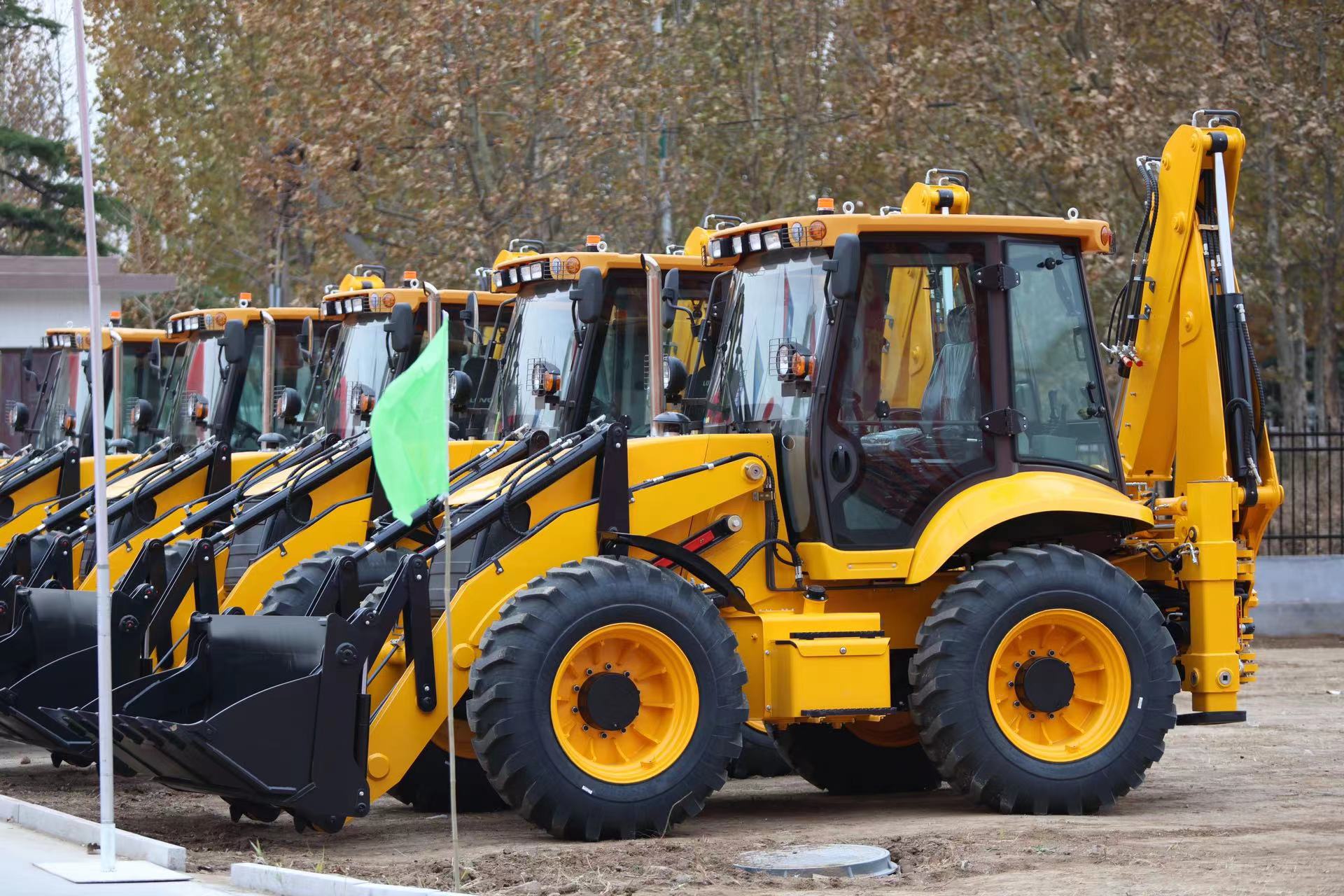
Backhoe loaders are very common and can be used for various tasks, such as construction, small-scale demolition, light transportation of building materials, supplying power to building equipment, excavation/excavation, landscaping, crushing asphalt, and paving. In many cases, backhoe buckets can also be replaced with power attachments, such as crushers, grab buckets, spiral drills, and tree stump grinders. Middle attachments, such as tilt rotators, can be used to enhance the articulation of attachments. Many excavators are equipped with quick connector (quick connect) installation systems and auxiliary hydraulic circuits to simplify accessory installation and improve machine availability on site. Some loader buckets have a retractable bottom or "clamshell style" for faster and more effective emptying. The retractable bottom loader bucket is also commonly used for grading and raking. The front component can be a detachable accessory or a permanent/permanent attachment. Due to the fact that digging with tires can cause the machine to sway, and the swinging weight of the backhoe may cause the vehicle to tilt, most backhoe loaders use hydraulic support legs or stabilizers at the rear to lower the loader bucket and increase stability during excavation. This means that when the vehicle needs to be repositioned, the bucket must be raised and the support legs retracted, thereby reducing efficiency. Therefore, many companies offer small tracked excavators, sacrificing loader functionality and field driving capabilities to improve excavation efficiency. The relatively small frame and precise control make backhoe loaders very useful and common in urban engineering projects, such as construction and maintenance in areas that are too small for large equipment. Its versatility and compact size make it one of the popular urban construction vehicles. For large-scale projects, tracked excavators are usually used. In recent years, small compact tractors have become very popular among private homeowners. Ultra small tractors with dimensions between compact tractors and lawn tractors are usually sold together with backhoe loader units, sometimes including belly mounted lawn mowers. These tractors will enable individual homeowners to carry out smaller excavation projects.

 CN
CN EN
EN RU
RU Location:
 2023-12-4





 鲁公网安备37078102002311